teaching
This page documents a range of my teaching experiences across higher ed, secondary, and primary settings. Each section includes case studies, curricula, and creative responses to the specific challenges of diverse learning environments.
_____
Examples of my original teaching resources are available for free at the bottom of this page.
Teaching Philosophy
As an educator and first-generation college graduate, I center my teaching on real-world relevance, student agency, and inclusive creative development. My classrooms emphasize practical learning, mutual respect, and long-view artistic growth – whether students are pursuing music professionally or engaging as part of a broader liberal arts education. I integrate adaptable strategies (e.g., peer collaboration, interdisciplinary methods, and UDL frameworks) to meet diverse student needs and help them build transferable skills for careers, communities, and lifelong learning. Drawing from experience across educational and artistic contexts, I also incorporate narrative and symbolic frameworks (including mythic structure) to help students make meaning of their work and connect deeply with their learning journeys.
HIGHER ED
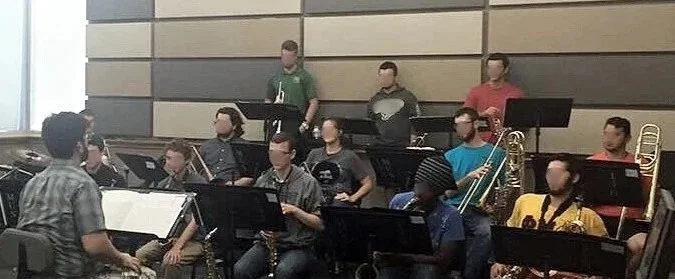
In Spring 2025, I was asked to stabilize and teach an undergraduate jazz theory course under last-minute conditions due to an unexpected faculty leave. The inherited course shell was loosely organized and lacked scaffolding, making navigation difficult for students. I quickly implemented a structured weekly module format, designed custom rubrics, and provided multiple final project pathways tailored to student interests. These changes supported a diverse cohort — including general education and non-performance majors — with no TA or grading assistant. The course achieved a high completion rate, strong student feedback, and a boost in enrollment compared to the previous year.
→ 🧭 See the Jazz Theory Course Rebuild (2025) case study for documentation of curriculum redesign, feedback methods, and student outcomes.
In 2024, I designed a full “Jazz for Preservice Music Teachers” syllabus and course sequence as part of my doctoral comprehensive exams. The course helps future educators integrate jazz into K–12 or early undergraduate classrooms through active listening, improvisation, and developmentally appropriate ensemble instruction. Drawing from current jazz pedagogy literature, the syllabus includes sample units, teaching strategies, and scaffolded assessments tailored for beginner-level students and novice jazz directors.
In addition to adjunct and large and small ensemble teaching, I’ve lectured across a range of graduate and undergraduate courses exploring connections between music and broader topics like educational psychology, career sustainability, arts policy, and the music industry. Sessions have included:
“The Holistic Musician”: guest lecture in a Music Business course on well-being, burnout, and identity
Graduate lesson plans on Classroom Management and Charter School rhetoric
“Post-Retro”: a community workshop for adults on the evolution of video game music and nostalgic sound design
Secondary School

As an itinerant music director and private instructor, I worked with middle and high school band, ensemble, and general music students across dozens of institutions along the East Coast. These varied environments — ranging from well-funded magnet schools to under-resourced programs in transition — informed my understanding of the systemic challenges in public music education, including scheduling, staffing, retention, and equitable access.
This wide exposure refined my adaptive pedagogy and deepened my commitment to responsive, student-centered music learning. I continue to pursue ongoing professional development; my NFHS music and coaching certificates can be found here. I focus on helping students play with expression, understand what they’re doing, and build confidence through feedback they can actually use.
→ 📝 Practical Teaching Guide: “Everything One Needs to Know About Teaching Music” (2024)
A one-page summary of foundational music teaching principles, drawn from field experience and comprehensive exam reflection.
Primary School

Some of my most creative curriculum design emerged from teaching PreK–8 general music and summer programs across diverse school systems. Working in early childhood and elementary classrooms sharpened my use of multi-modal scaffolding, creative literacy, and exploratory music techniques.
One recurring issue I noticed was that families often committed to an instrument too early — before students had the chance to explore their interests. In response, I developed the “Instrument Explorer” curriculum: a hands-on, budget-friendly program that introduces all five instrument families through guided activities, listening exercises, and physical engagement with low-cost “primer” instruments. The course has been implemented as a one-week intensive, an 8-week unit, and a full-semester enrichment class. It supports student agency, parent engagement, and long-term ensemble recruitment.
→ 🎒 See the full curriculum, budget templates, and resources: Instrument Explorer: A Flexible, Hands-On Curriculum for Young Musicians (2018)
Teaching Resources
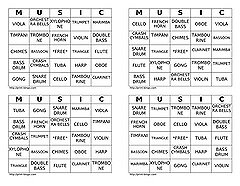
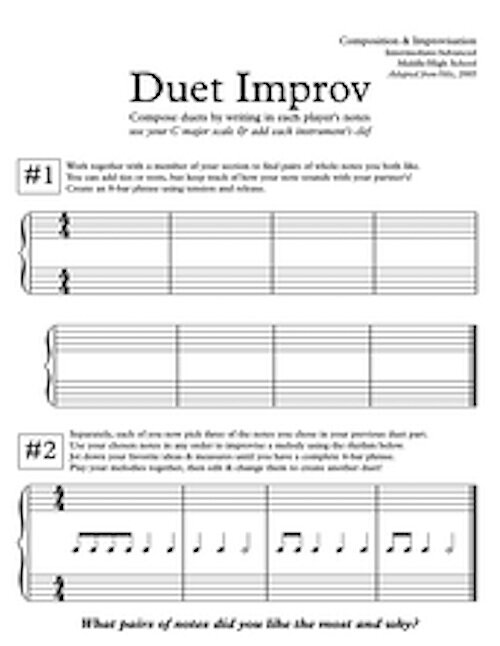
Below are examples of teaching resources I’ve created, including instrumental lesson aides, ear training worksheets, diversity and inclusion tools, and more. Feel free to use these resources in your own practices, or email me at saxamassima@gmail.com for more info.
→ 🗃️ You can also visit the Music Educators’ Resource Library (mERL)– a public service project compiling hand-curated creative materials, enrichment resources, and literature for K–12 music educators.