
Research
My research centers on how musicians’ educational and creative pathways are affected by structures of capital, identity formation, and community engagement. This includes empirical and conceptual studies of pedagogical environments, sociocultural feedback systems, creative research practices, and interdisciplinary tools for holistic artistic development. Across projects, I aim to integrate rigorous scholarship with practical inquiry to support equitable, inclusive, and innovative frameworks in music education and the creative arts. A list of selected video presentation links can be found here.
Musician roulette | 2026
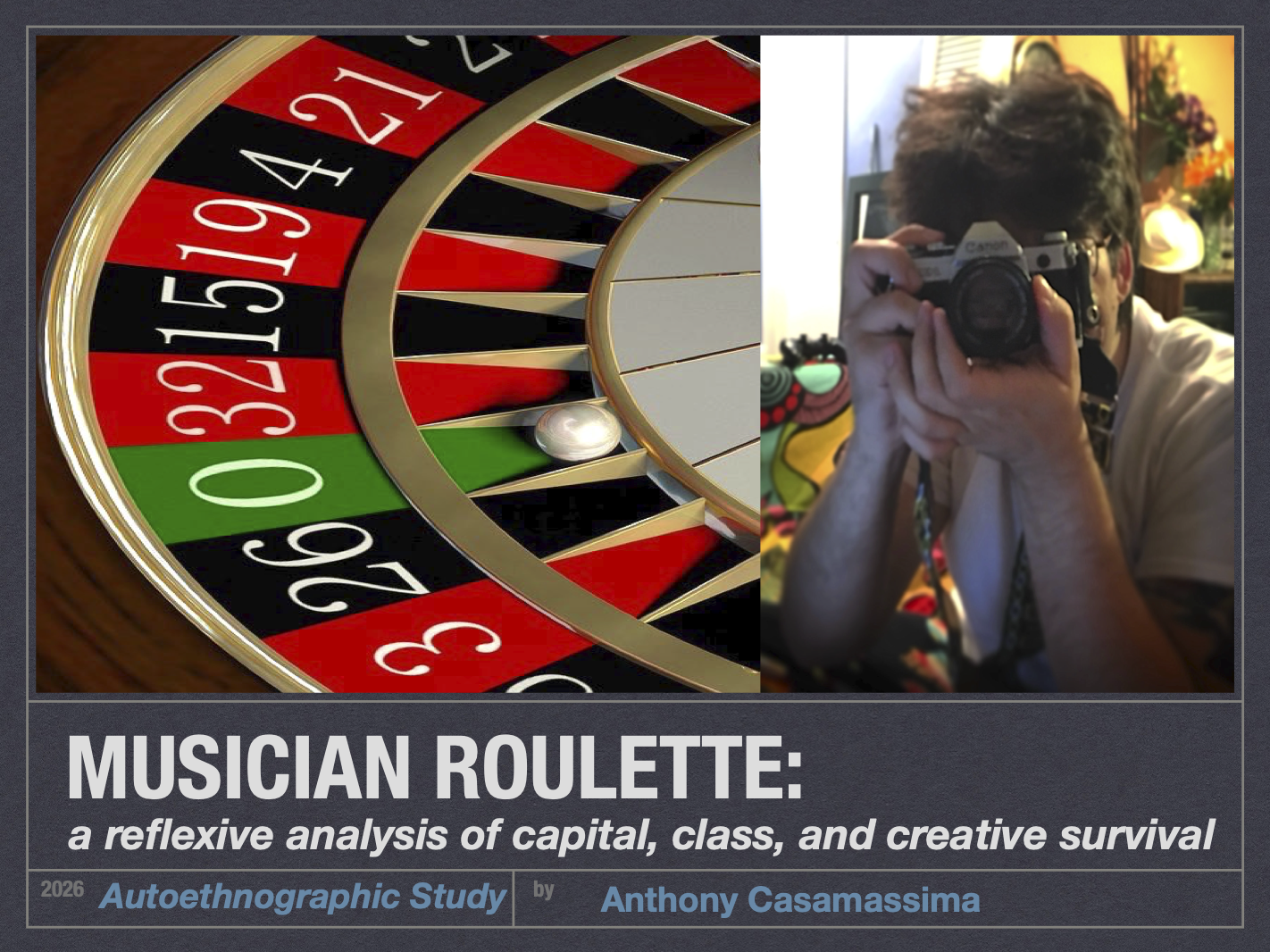
This peer-reviewed autoethnographic study explores the intersecting pressures of class, labor, and identity across the career of a first-generation college student and working-class musician pursuing a professional trajectory in music and higher education. Grounded in Bourdieu’s capital theory and related frameworks (including socioemotional capital, self-determination theory, and future orientation), the study critically reflects on my own lifelong experiences navigating music training, academic mobility, and economic precarity. Drawing on personal narrative, thematic analysis, and epiphanic moments of reflection, the paper highlights how inequities in social, cultural, economic, and symbolic capital influence artistic outcomes. Findings suggest that career advancement in the arts is not merely a function of productivity or talent, but of compounding capital access and strategic timing. This work contributes to ongoing conversations in cultural sociology, music education, and equity in the arts by modeling a reflexive, insider account of how cultural laborers adapt, survive, and resist in stratified systems. The slides used for a working-class conference presentation of this paper can be found here.
capital vs music equity | 2025
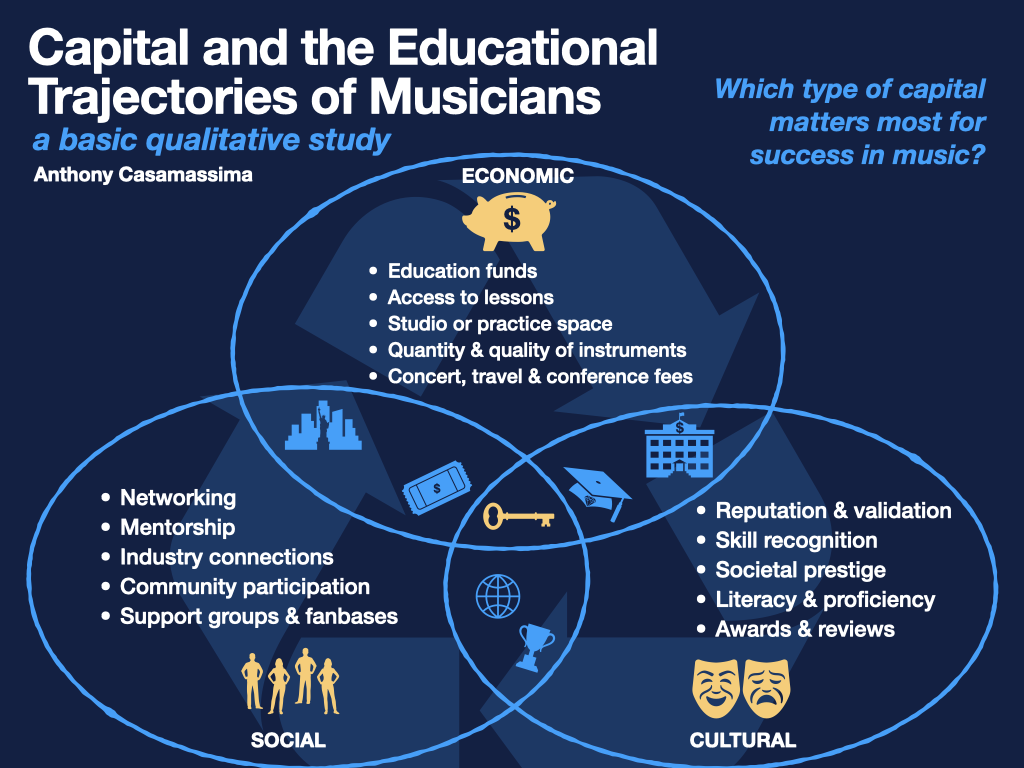
My doctoral dissertation examines how social class shapes musicians’ educational and career trajectories, using sociological theories of capital to analyze inequities in access, training, and labor outcomes. Building on prior literature, this study moves beyond review into empirical investigation, examining how class intersects with race and gender to influence musicians’ experiences within education systems and professional markets. A shortened sample of this project can be found here.
AI, Equity & Music Education | 2024
Examines how artificial intelligence intersects with cultural capital, access, and equity in music education, drawing on qualitative interviews, reflective analysis, and AI-mediated interactions. Framed through Bourdieu’s theory of cultural capital, the study explores how AI can both support skill development and reproduce systemic inequities, emphasizing the need for intentional, ethical integration in educational contexts. A brief video presentation outlining the study’s framework, methodology, and implications for music education practice is available online.
Classroom management | 2023
This conceptual paper synthesizes research in music education, cognitive psychology, and classroom management to propose a three-part framework for effective learning environments: structural design, reflexive feedback, and guided engagement. Drawing from empirical and theoretical literature, the model emphasizes socioemotional regulation, consistency, and adaptive guidance as foundations for student motivation and autonomy. The paper informed my course design and instructional practices in undergraduate music theory and ensemble settings. A brief video presentation outlining this framework is available online.
musician sociology | 2021
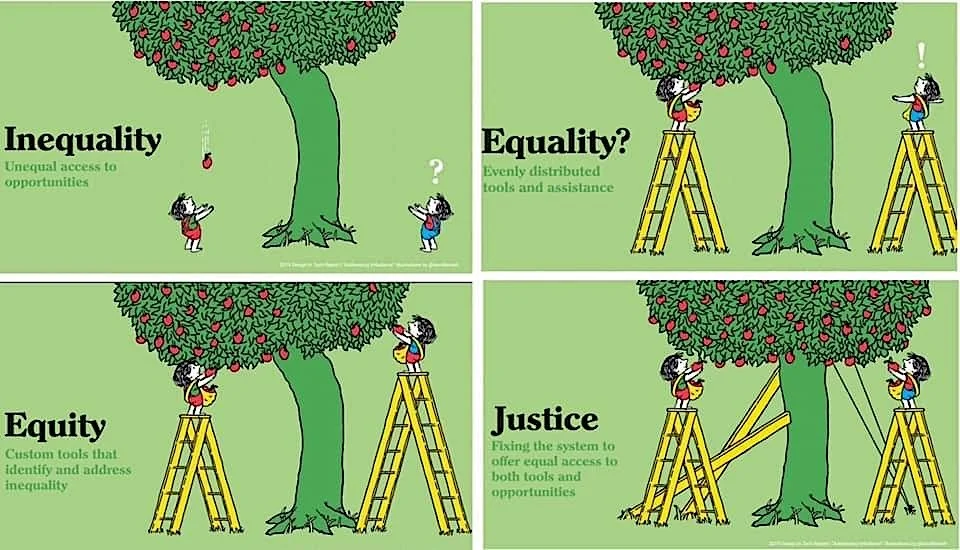
This master’s thesis presents a comprehensive literature review on the relationship between social class and musicians’ experiences in education and the cultural labor market. Using sociological theories of capital as a guiding framework, the project synthesizes research on class, education, and artistic trajectories, identifying key gaps that motivated later empirical study. A shortened sample of this project can be found here.
Visually Assisted Music | 2019

This project is an interdisciplinary investigation of a tool to help students with learning disabilities. Visually Assisted Music (VAM) is an adaptation of the Picture Exchange Communication System (PECS), a tool used to help nonverbal autistic students communicate. I created templates that assist students not only in the music classroom, but with learning overall. A presentation with full literature review can be found here.
Interactive deliberate practice | 2018

My review of the music education literature on real-time feedback in jazz improvisation classes allowed me to explore new avenues of assessing and involving students with their peers in real-time. The synthesized findings indicate that use of my proposed “Interactive Deliberate Practice” feedback loops could improve student learning in a group jazz improvisation class setting.
Interdisciplinary ARts Collective | 2016
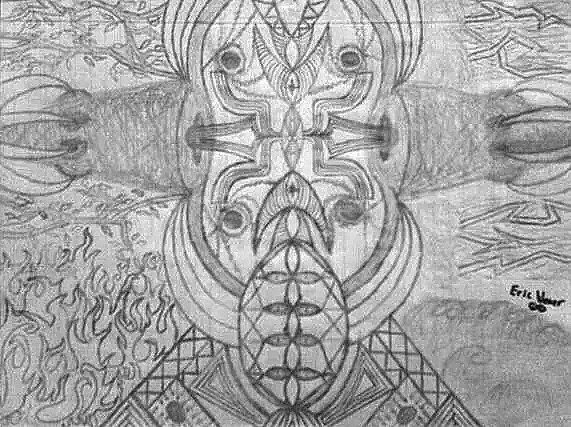
My vision is one of an arts department that collectively works with other departments to create a more collaborative approach to serve the community through mutual benefit and collective support. Interaction between departments in a college setting is crucial to the successful integration of arts departments into their respective communities, especially in areas without a current local artistic scene. I wrote a grant proposal for the Hillsborough County Arts Council detailing a performance that included visual art and dance set to recorded original compositions.
healing pedagogy | 2015

My musician lifestyles thesis paper, “Finding Balance,” reviewed the literature on life expectancy for musicians from different genres and their respective occupational hazards. I found that classical musicians have a higher lifespan than the general public on average, whereas rock and jazz musicians have lower lifespans. The occupational hazards for musicians are often physical injuries from playing, and lifestyle factors are not often assessed. Given the nature of performing as a jazz musician, I propose an empirical study to survey and interview working musicians about their lifestyle choices, including their sleep, eating habits, and wellness activities, and to examine how their work hours may or may not affect those choices.
I also used this research to inform my presentation on improving musicians’ lifestyles, “The Holistic Musician”, and later expanded it into a post-pandemic healing-centered pedagogical toolkit for professional development, titled “Musician Quality of Life: Finding Balance in the Music Field.”
CREATIVE RESEARCH
Hybrid knowledge practices bridging research, teaching, and service through art.
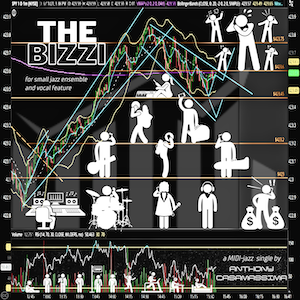
The Bizzi: A Creative Research artifact
🎧 Hear the track on BandCamp
📝 Referenced in: “The Bizzi: Symbolic Capital and Mythic Pedagogy in Creative Research” (in review, IJEA)
This album single operates as a creative research artifact — a mythic autoethnography using digital instrumentation and pedagogical metaphor. Built entirely in MIDI, The Bizzi transposes academic precarity, creative autonomy, and symbolic labor into sonic form. It reflects an emerging creative framework (Mythic Pedagogy) that bridges sonic storytelling, pedagogical symbolism, and aesthetic research. Full credits, research framing, and critical storytelling with mythic roles can be found in the album booklet.
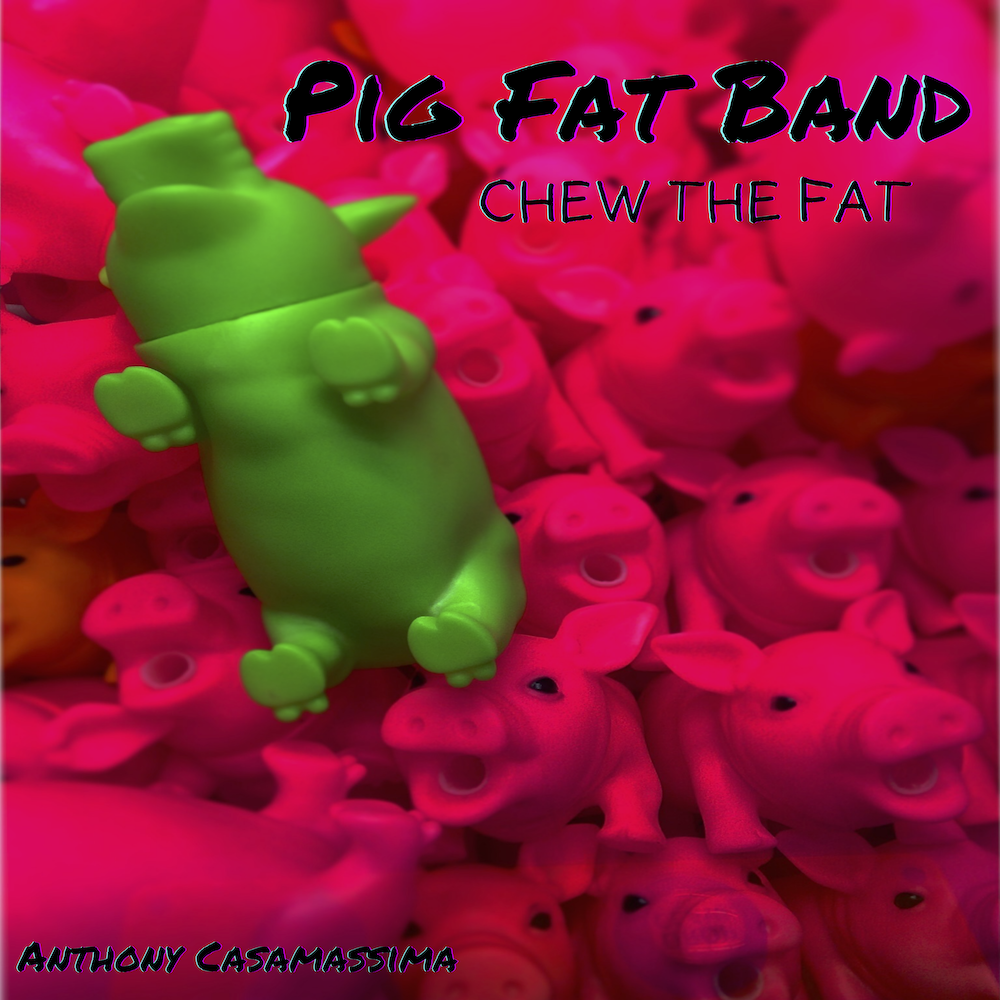
Chew the Fat: A merger of art and analysis
🎧 Hear the album on BandCamp
📖 Liner notes: Analysis and prose included in the album booklet.
This early big band and chamber work experiments with sonic storytelling and cultural commentary — combining jazz-classical hybrid forms with playful-yet-critical liner notes. Written during my 2016 Master’s program, Chew the Fat includes reflections on process, performance labor, and absurdity in artistic environments. While not a formal research submission, it offers a glimpse into the layered creative inquiry that would later crystallize into works like The Bizzi. Some of these themes — symbolic labor, aesthetic capital, pedagogical absurdity — would resurface years later in more developed creative-research formats.