
SERVICE PROJECTS
Engaged Service & Community Initiatives: This archive features independently developed projects supporting collaborative learning, community music engagement, and pedagogical innovation beyond institutional mandates. Each project includes a concise concept summary, structural overview, and selected provenance materials (e.g., flyers, forms, screenshots). Projects are included regardless of institutional uptake and are offered as open contributions to ensemble design and music education practice.
Author’s Note: “This project was developed and implemented independently. All charts, visuals, and design frameworks remain available for reuse or adaptation. Documentation materials establish authorship and remain archived for record-keeping and future deployment.”
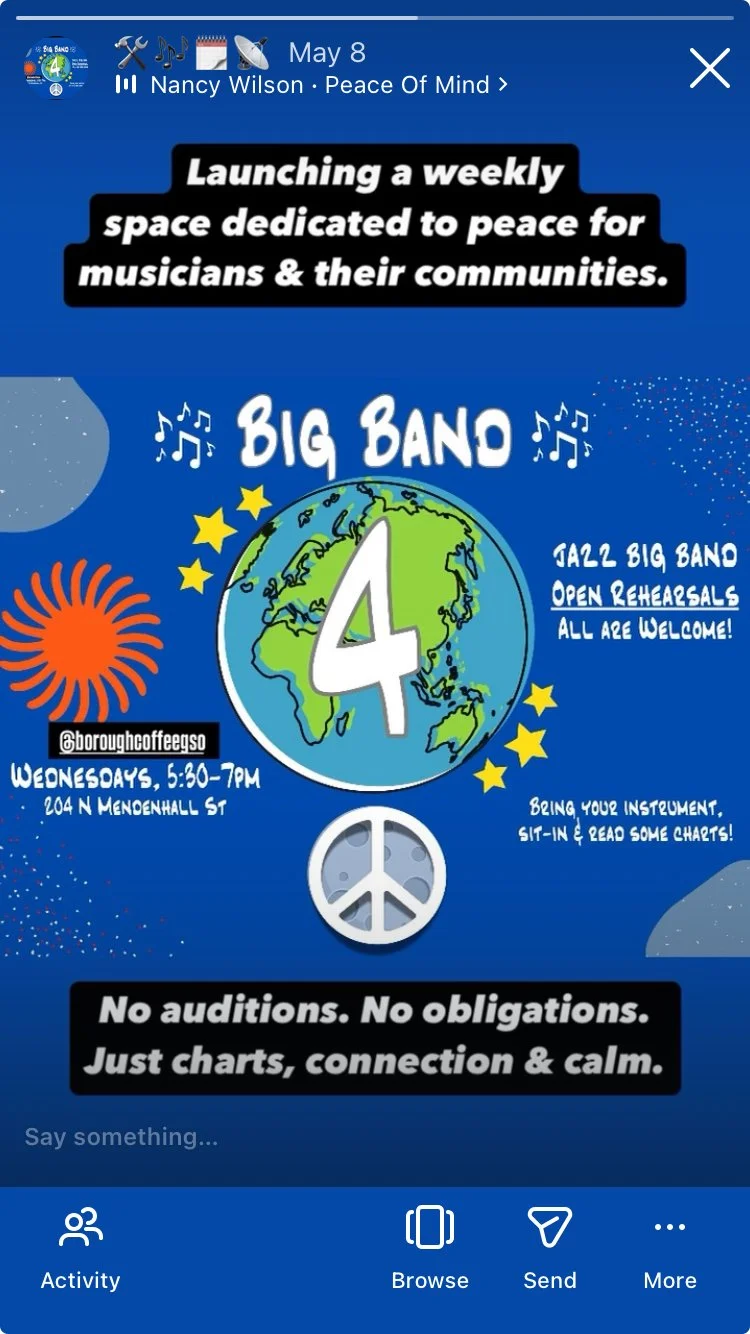
Big Band for peace (BB4☮) | 2025
(Community Jazz Rehearsal Model)
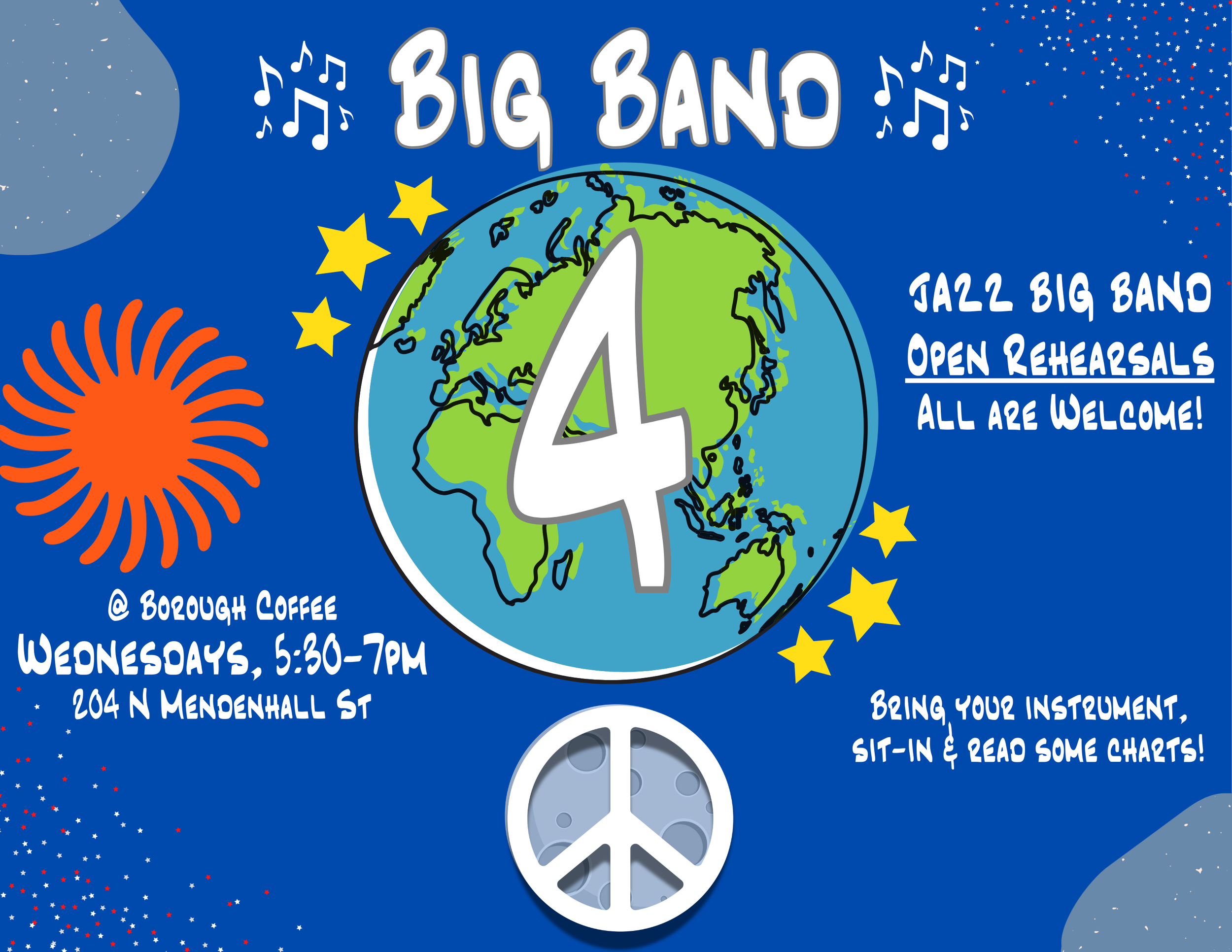
Big Band for Peace (BB4☮) was an independently initiated, community-based jazz rehearsal project designed to create a low-pressure space for collective music-making outside traditional performance and audition structures.
The project was conceived as an open rehearsal rather than an ensemble or class. Musicians were invited to sit in, read charts, listen, or simply be present. There were no auditions, no performance expectations, and no requirement to commit beyond showing up. The emphasis was on presence, accessibility, and shared musical experience.
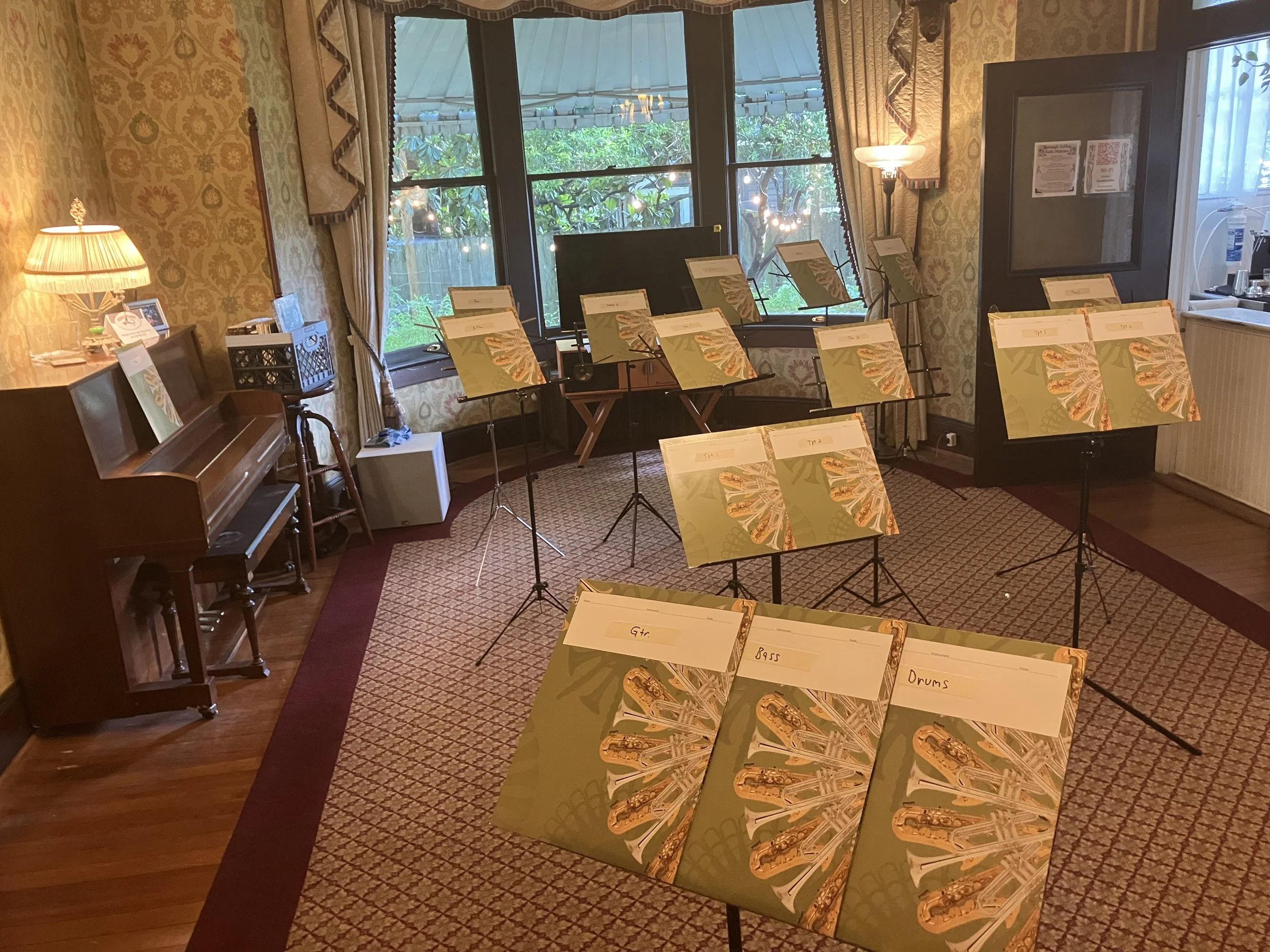
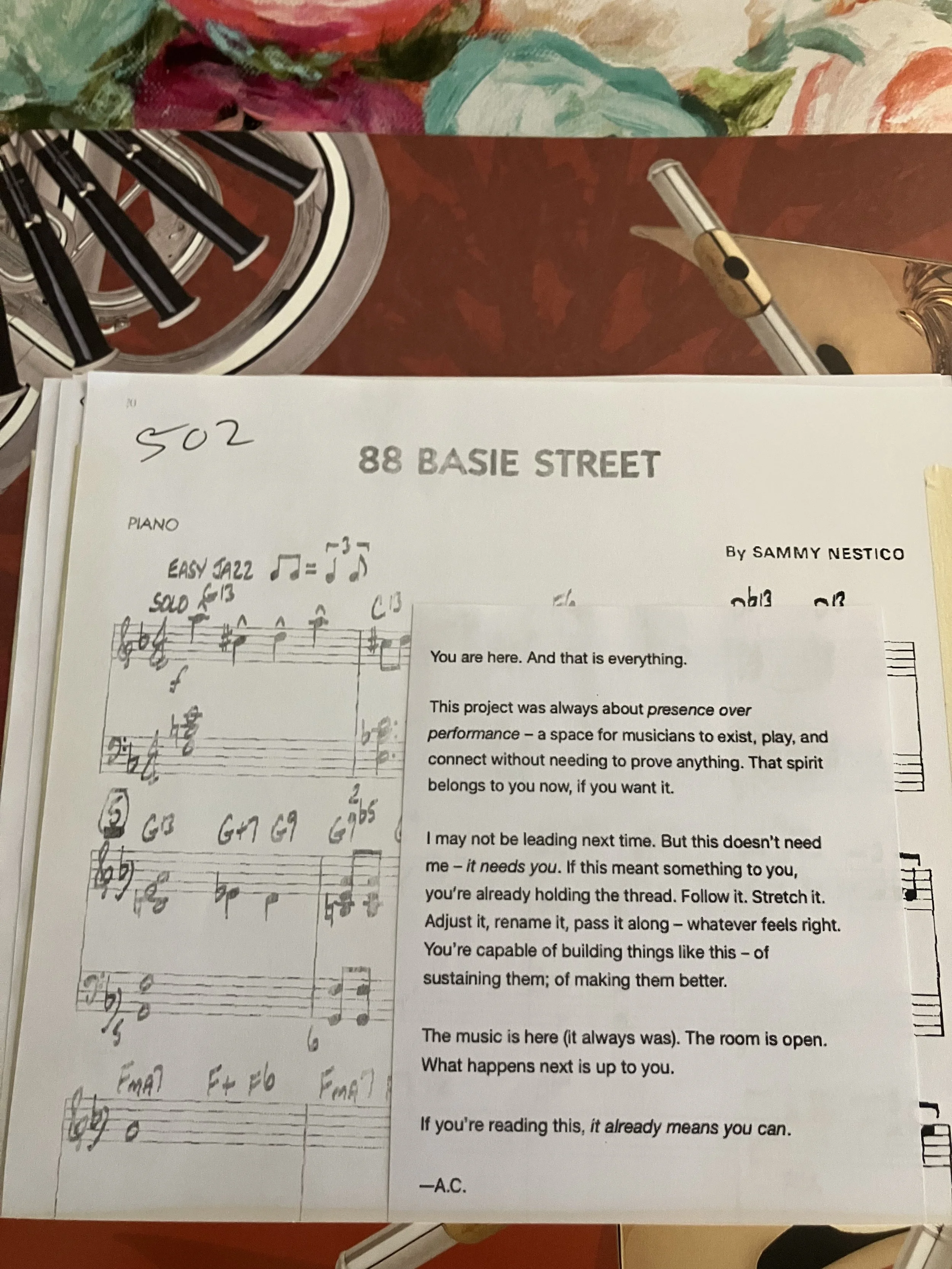
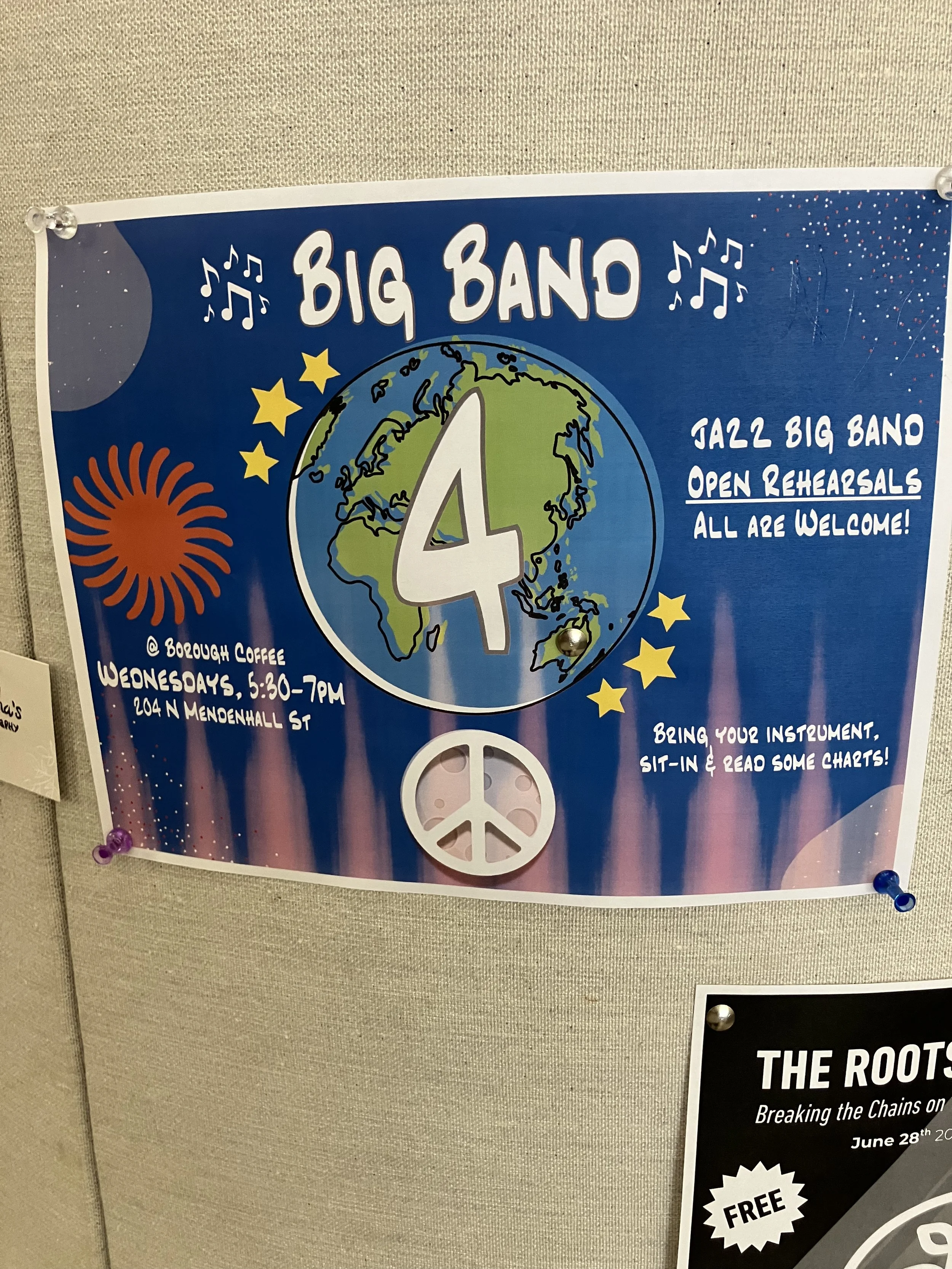
I developed and implemented the project independently, including securing a public venue, designing and distributing original promotional materials, preparing full big band instrumentation books, and setting up the space for participants. Invitations were extended both digitally and through physical materials placed in community and educational spaces.
Although no participants attended the initial session, the project successfully surfaced a key constraint within the local music ecosystem: participation was highly dependent on institutional validation, visibility, or reduced personal risk. In this sense, the project functioned as a diagnostic as well as a service initiative.
The concept remains valuable as a transferable template for rehearsal-as-lab models, community music activation, and non-competitive ensemble spaces. All materials, documentation, and design elements are archived under my authorship and remain available for future adaptation or reactivation in contexts better aligned with this approach.
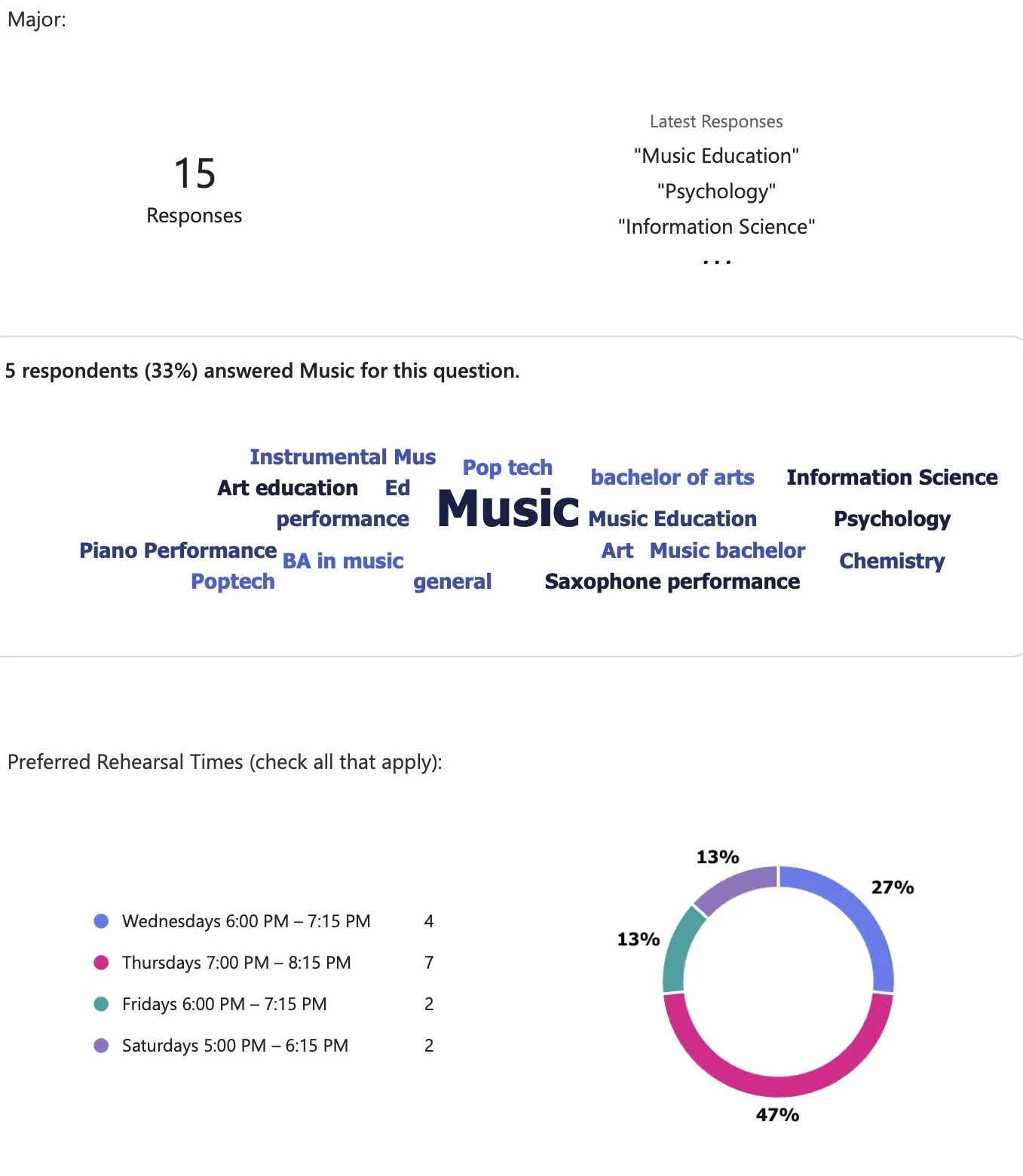
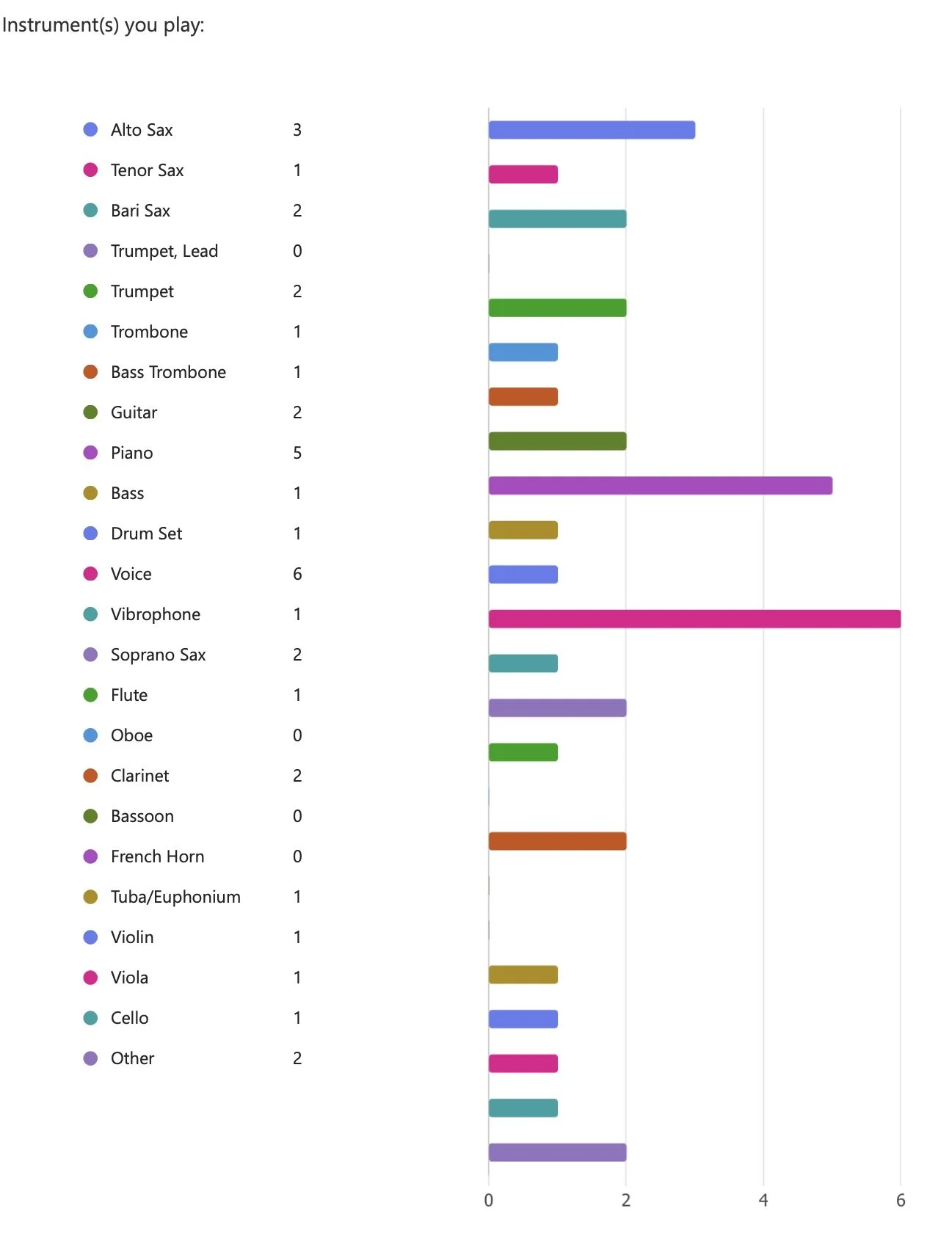
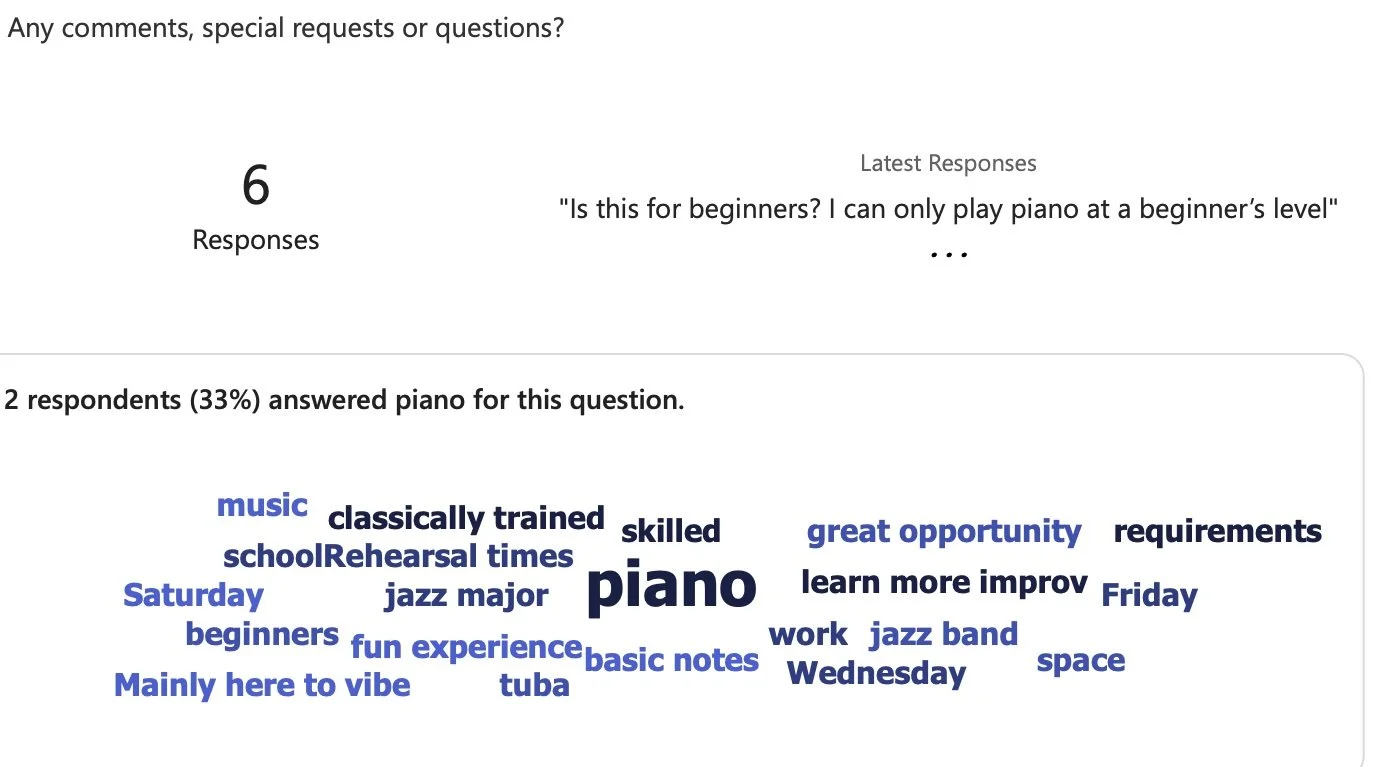
Author’s Note: “Supporting documentation and materials are archived and timestamped, including flyer drafts, outreach emails, interest form data, and responses. These materials establish authorship sequence and conceptual development. Full documentation available here.”
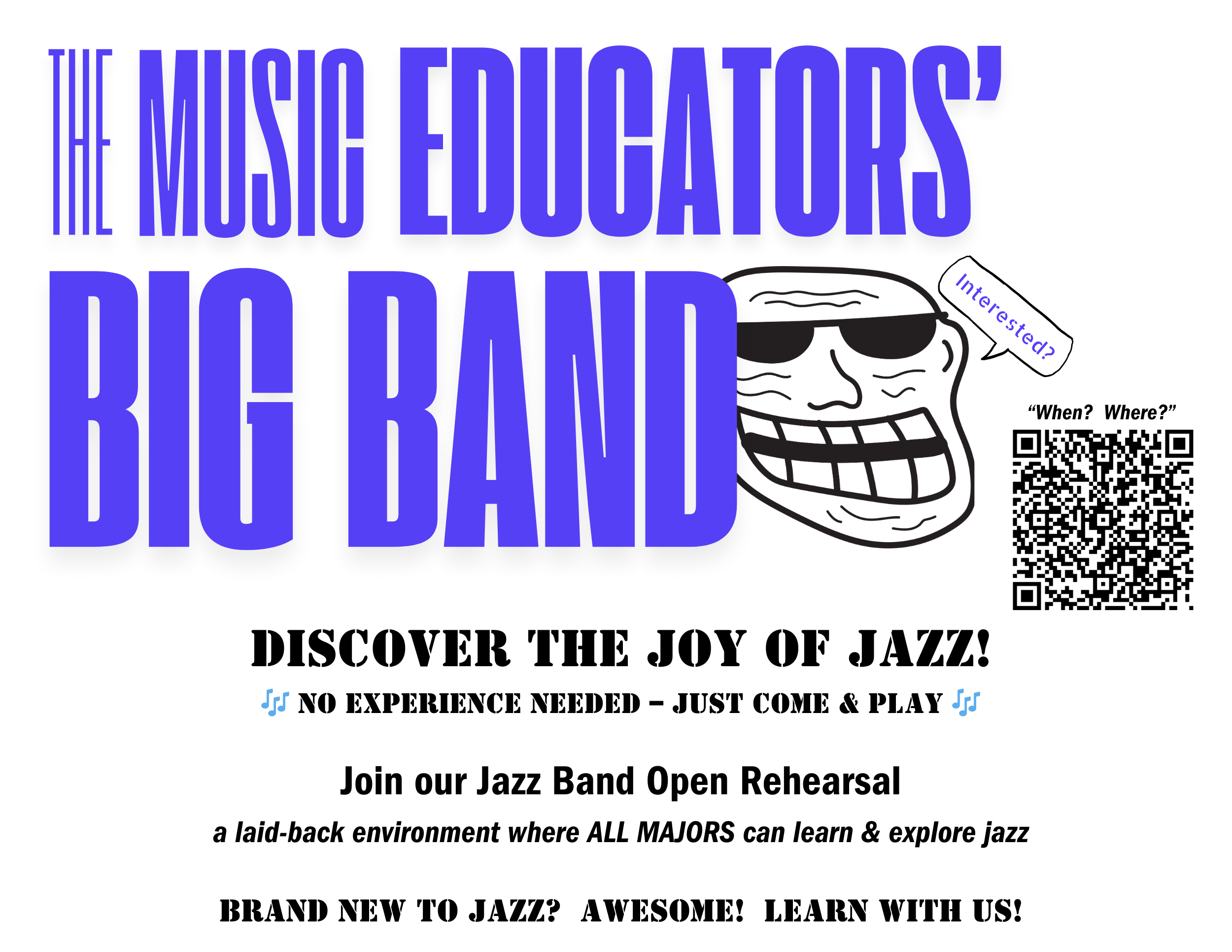
Music Educators’ Big Band | 2025
(Jazz Pedagogy Lab for Music Educators)
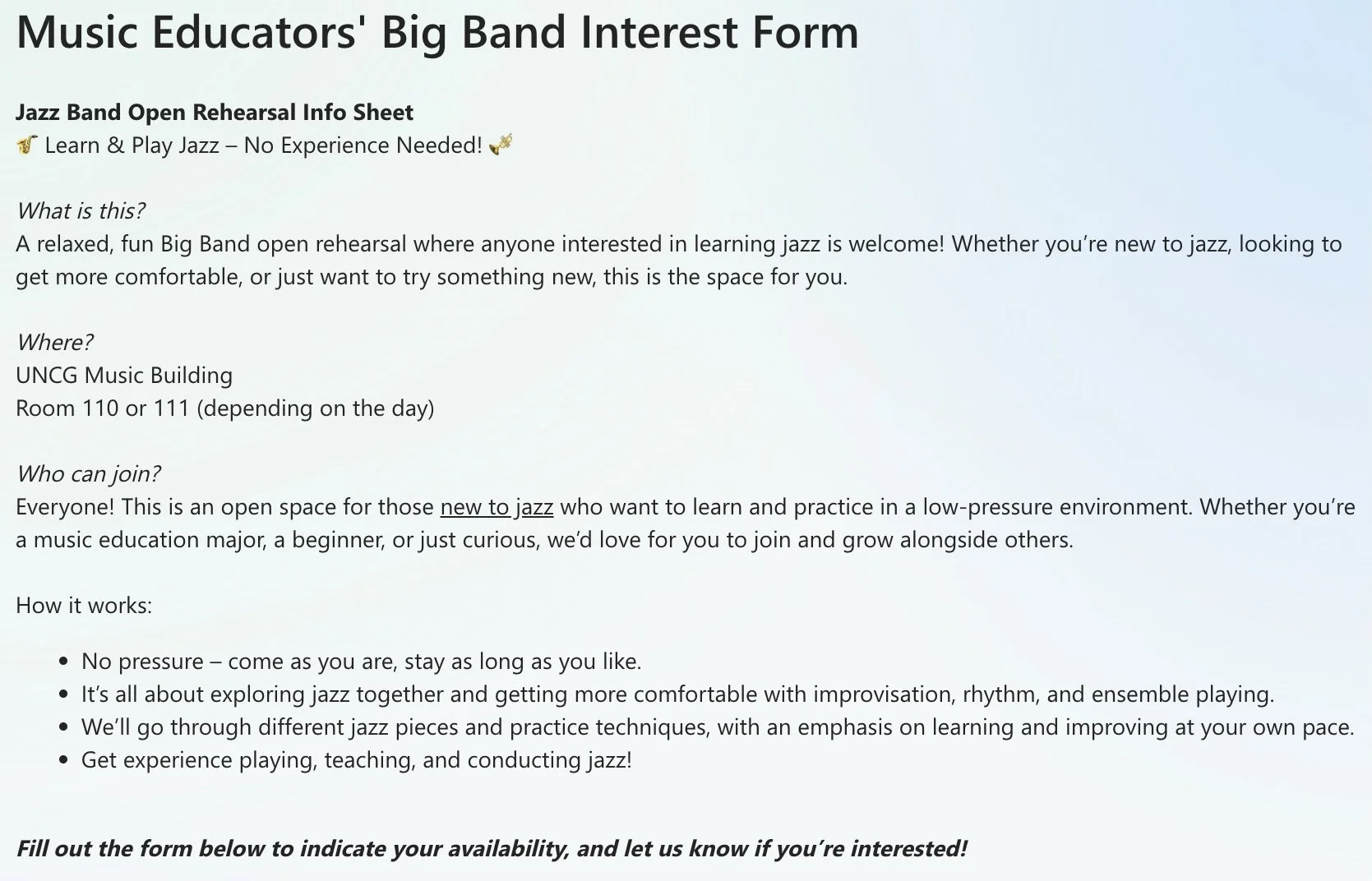
The Music Educators’ Big Band was an independently developed ensemble model initiated in early 2025. It was designed specifically for music education majors to gain hands-on experience learning, leading, and rehearsing in a jazz band setting. Participation was also open to non-majors and practicing educators, offering a low-pressure, rehearsal-focused environment distinct from traditional audition-based ensembles.
This was not a repertory or concert-driven group, but a pedagogical laboratory — an experimental rehearsal space intended to prototype democratic, educator-centered ensemble practices for those new to jazz. The model aimed to address gaps in existing course offerings by simulating the kinds of rehearsal contexts new jazz educators are likely to encounter in real-world teaching scenarios.
The ensemble emphasized accessibility, educator development, and ensemble leadership over public performance. By offering an open, student-led format outside formal ensemble structures, the project supported collaborative rehearsal practice and practical teaching strategy development in an inclusive setting.
Structural Features:
• Non-audition, open participation across cohorts
• Educator-centered, not performer-centered
• Rehearsal-as-lab model (no concert requirement)
• Modular, flexible participation (includes non-music majors and educators)
• Initiated and developed independently outside official ensemble offerings
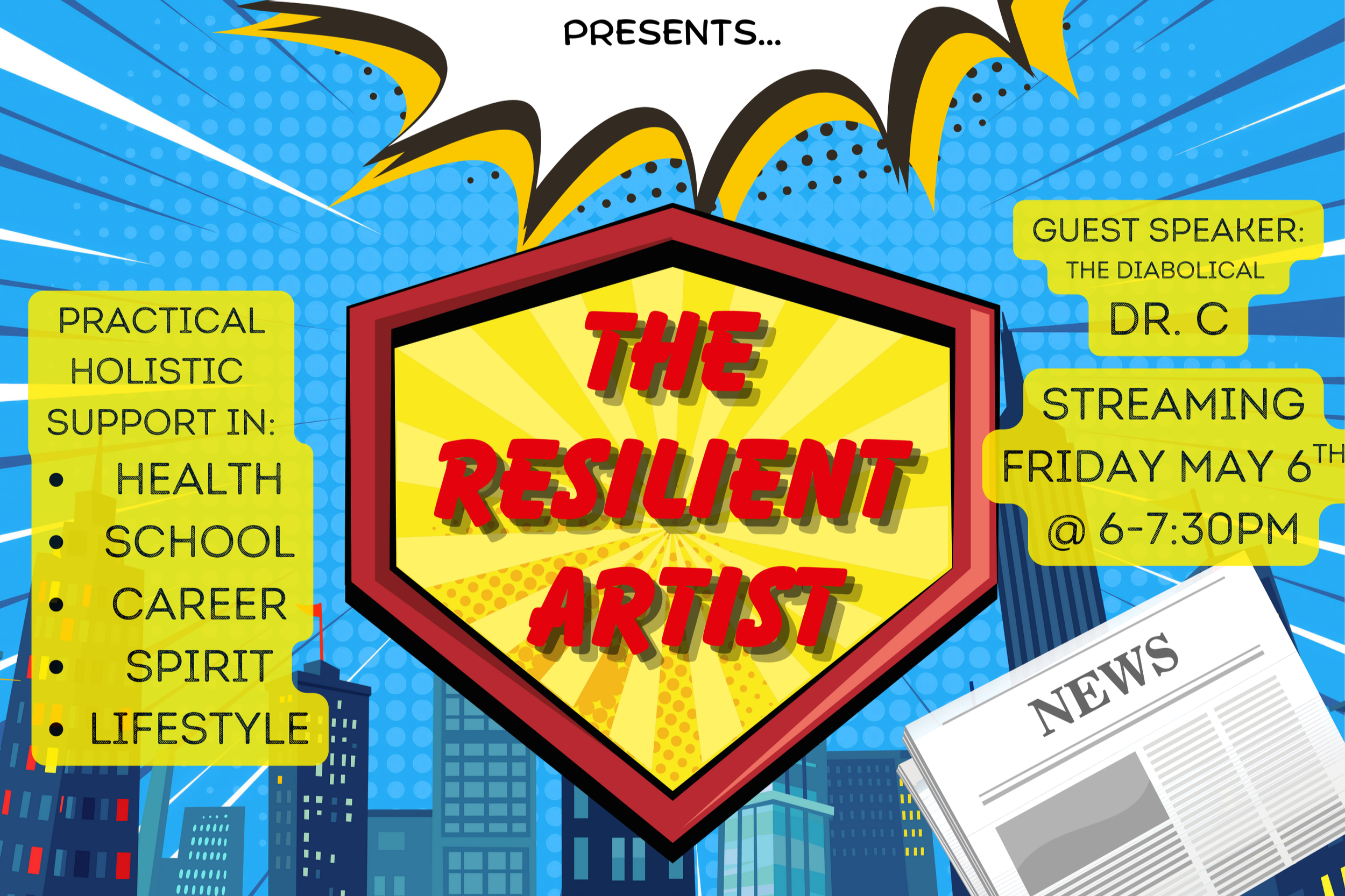
The Resilient Artist | 2024
(Creative Development Workshop)
This workshop was designed as a leadership-focused workshop exploring how artists navigate instability, visibility, and self-definition in an evolving creative economy. Developed for a group of professional artists in education, the session introduced a resilience-based framework that integrates narrative authorship, adaptive strategy, and long-view career planning.
The goal was not just to “survive” artistic life but to challenge extractive systems and support sustainable practice — helping artists build protective mental models, reclaim authorship over their public/professional selves, and identify structures that serve their development rather than drain it.
Drawing from lived research and cultural labor theory, this workshop opened a space for shared reflection, boundary-setting, and adaptive career visioning. It explored core concepts in creative resilience, artistic identity, and long-term sustainability for industry-based performers navigating systemic precarity.
![Dr. C’s music lab [FLYER].jpg](https://images.squarespace-cdn.com/content/v1/5dffb336245deb77533d9fa5/1764915662198-60C6IBBR04U9BS59NLFH/Dr.+C%E2%80%99s+music+lab+%5BFLYER%5D.jpg)
Dr. C’s Mad music lab | 2024
(Creative Peer Mentorship Hub)
An interdisciplinary support space where students brought ongoing creative, academic, and professional projects for guidance and collaborative feedback. The Lab integrated mentorship in production, composition, theory, research, pedagogy, and career development with structured peer learning across disciplines.
Students were encouraged to bring real, in‑progress work — from unfinished tracks to job applications — and receive both expert feedback and community insight. Over time, the Lab evolved into a peer‑driven creative R&D environment, where mentorship was mutual rather than hierarchical and participants increasingly drove the Lab’s direction and values.
Student interests and needs ranged from:
• Theory & Orchestration • Composition & Arranging
• DAW & Pre-production • Vocal Music & Songwriting
• Philosophy & Pedagogy Analysis • Research & Curriculum Design
• Performance & Teaching Evaluations • Holistic Career & Academic Advising
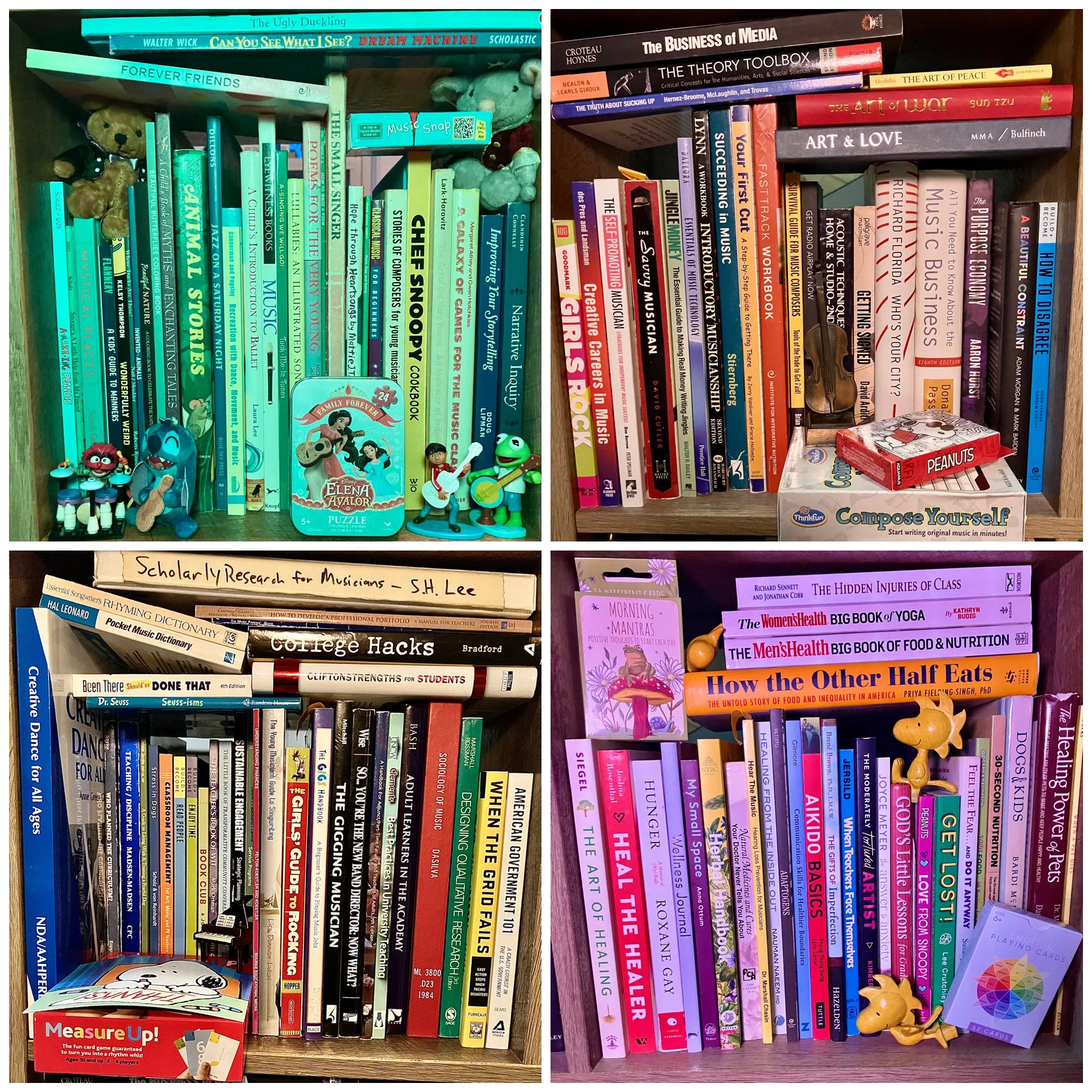
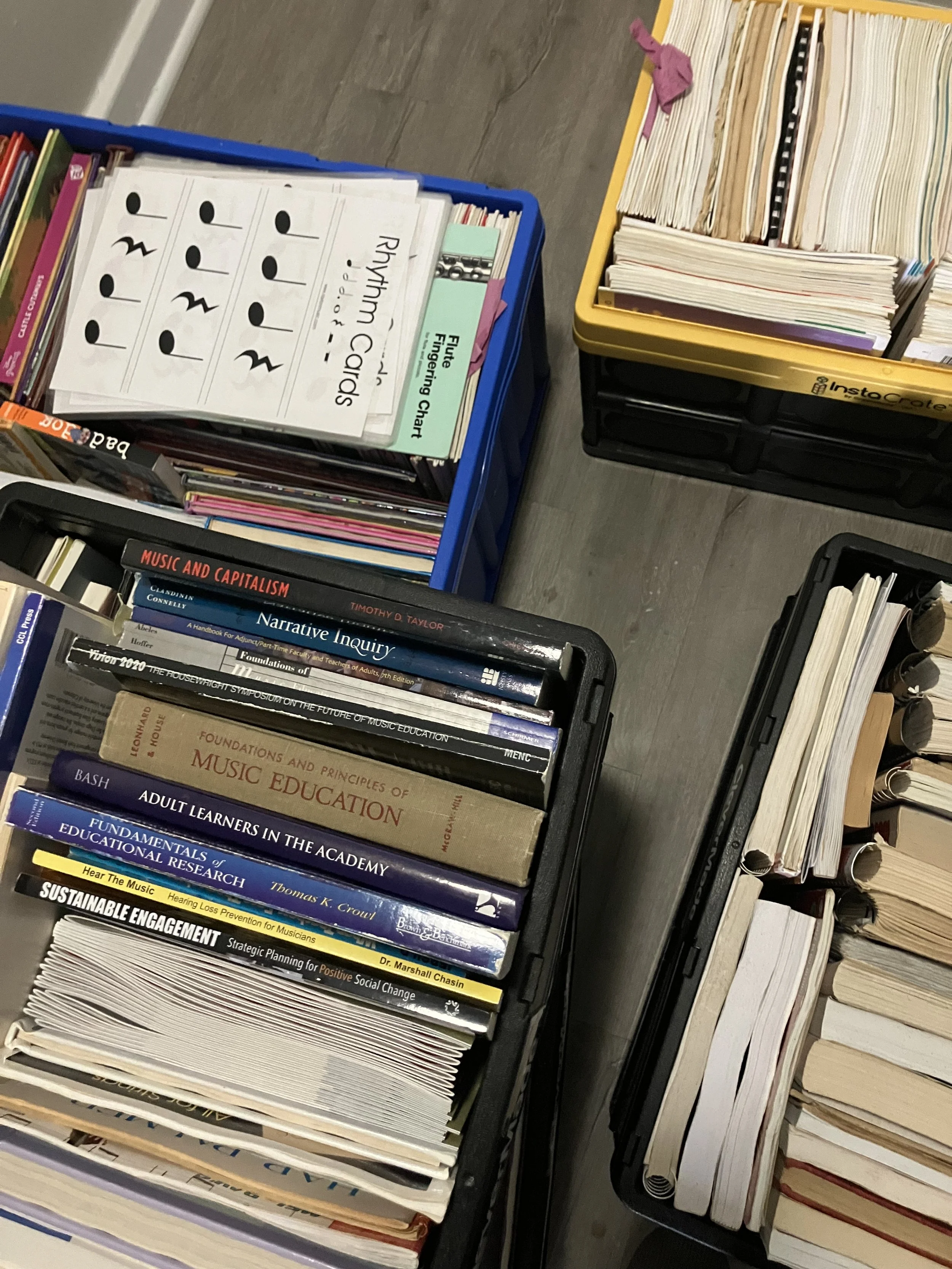
Author’s Note: “The original Music Educators Resource Library (mERL) was drafted and deployed in 2023 to house adaptive, student-centered music-specific enrichment resources. In 2024, a similarly named institutional project (‘Research Library’) was launched without attribution. This record is included to clarify project timeline and authorship.”
Music Educators’ Resource Library (merl) | 2023
(Physical Resource Archive)
The Music Educators’ Resource Library (mERL) is a physical archive of arts-specific materials — books, CDs, DVDs, films, multimedia, and musical keepsakes for school program recruitment and engagement — curated for teachers, students, and community musicians. Modeled for use in a public library system, the mERL lets visitors browse, borrow, and test creative resources before investing in their own copies. The collection spans music education, performance, composition, dance, poetry, and cultural studies, offering teachers a hands-on way to design lessons and workshops from real media instead of abstract curricula.
The mERL’s goals are twofold:
Make music learning tactile, fun, and accessible while preserving materials that have inspired generations of artists.
Provide a consistent curated supply of useful arts-specific resources for music educators to strengthen their programs and pedagogical skills.
Applications of a mERL in university settings should include a role in a rotating curation community engagement project, whereby graduate music education students can procure new materials (e.g., using university surplus resources, by donation, or through local thrift/book stores) and remove outdated or damaged materials as appropriate.
The first mERL startup donation to a local library is set to be made in 2026, in association with university music education programs and educators.
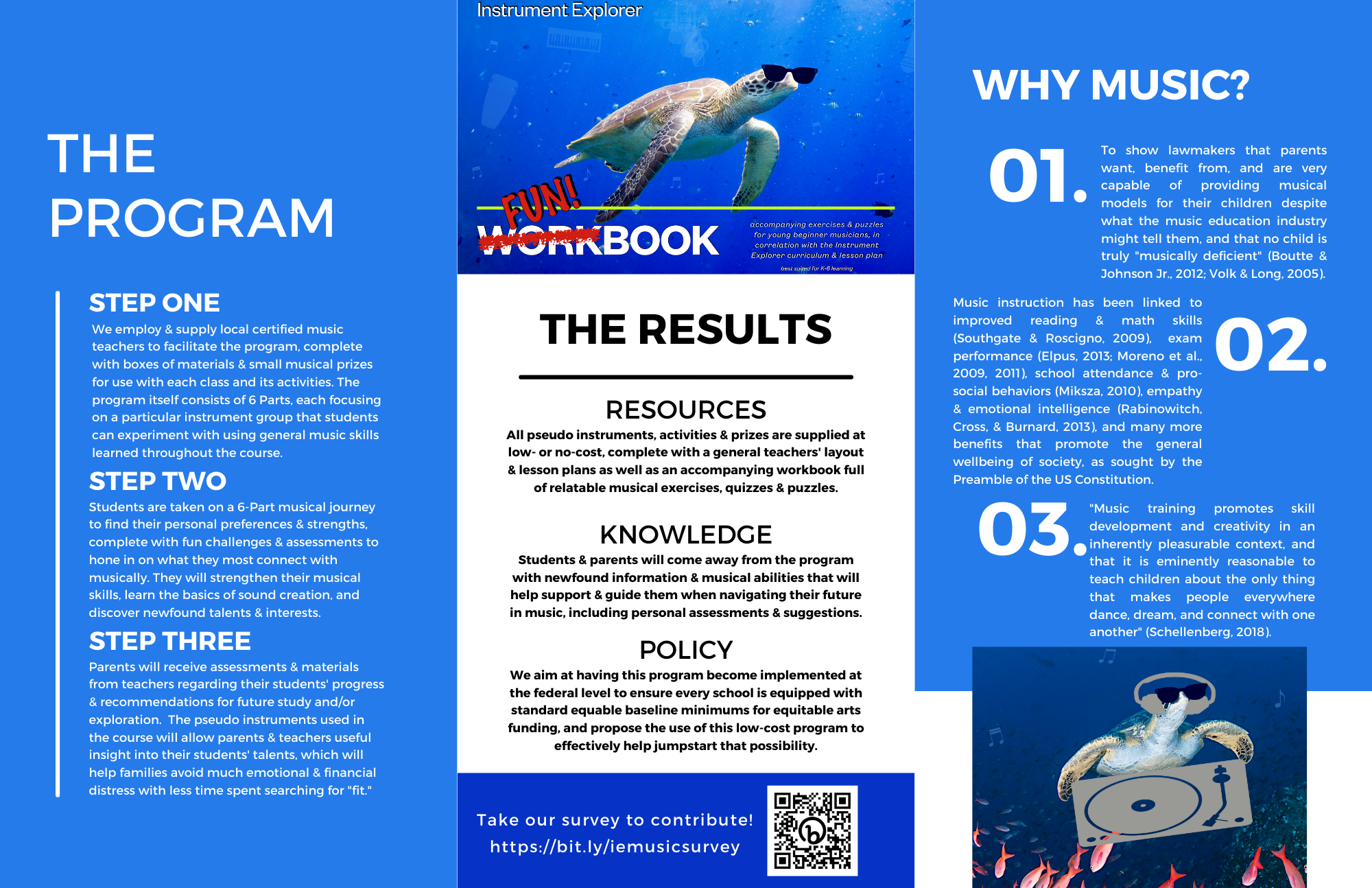
Instrument explorer | 2021
(K–6 Curriculum Sampler – Archived)
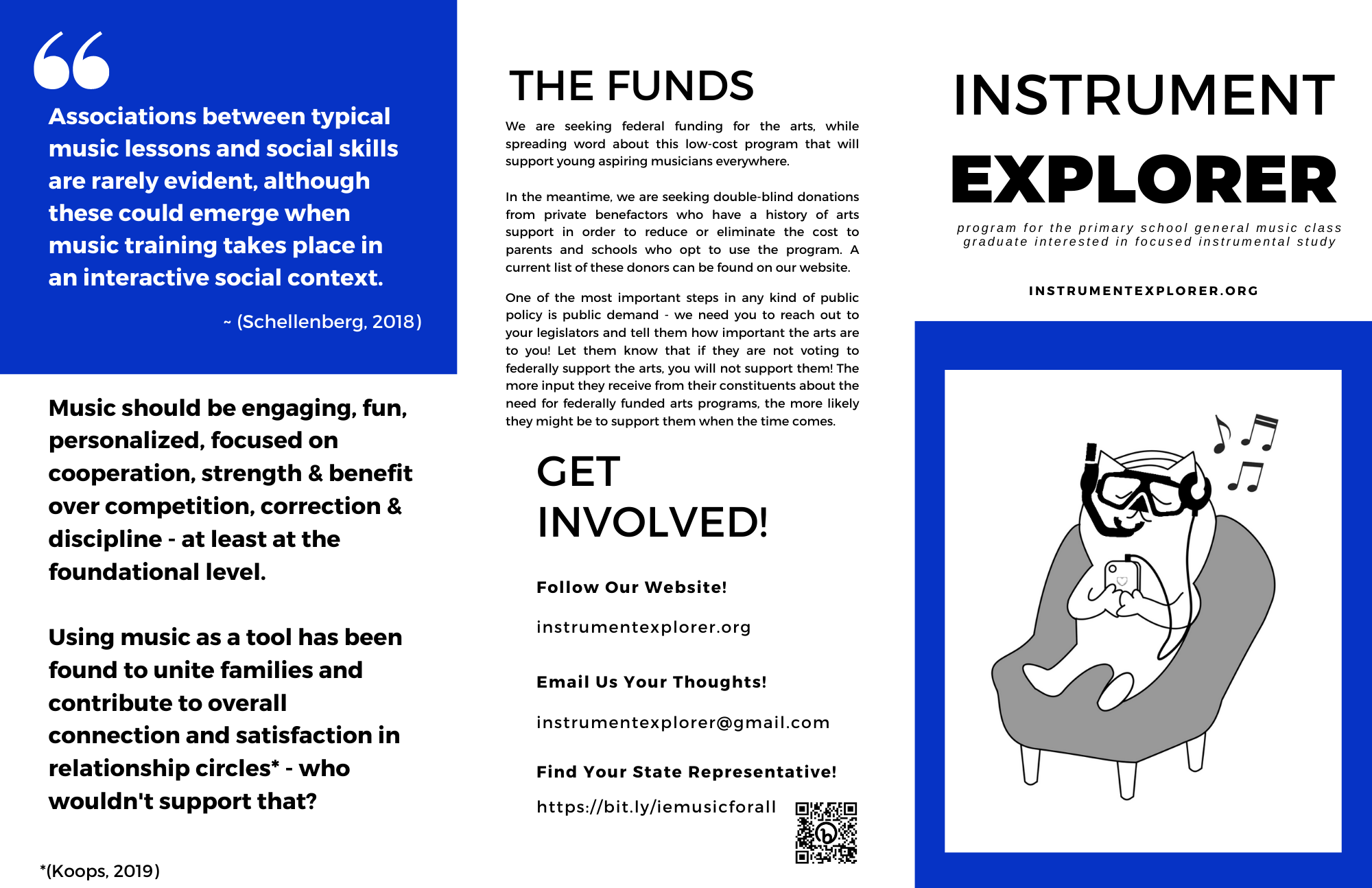
Instrument Explorer is a flexible, cost-conscious curriculum designed for general music graduates in K–6 settings. Originally piloted as a summer camp and adaptable for semester-long implementation, the program allows students to explore all five instrument families using low-cost materials (like vuvuzelas, ukuleles, and water bottles) to simulate traditional band/orchestra instruments.
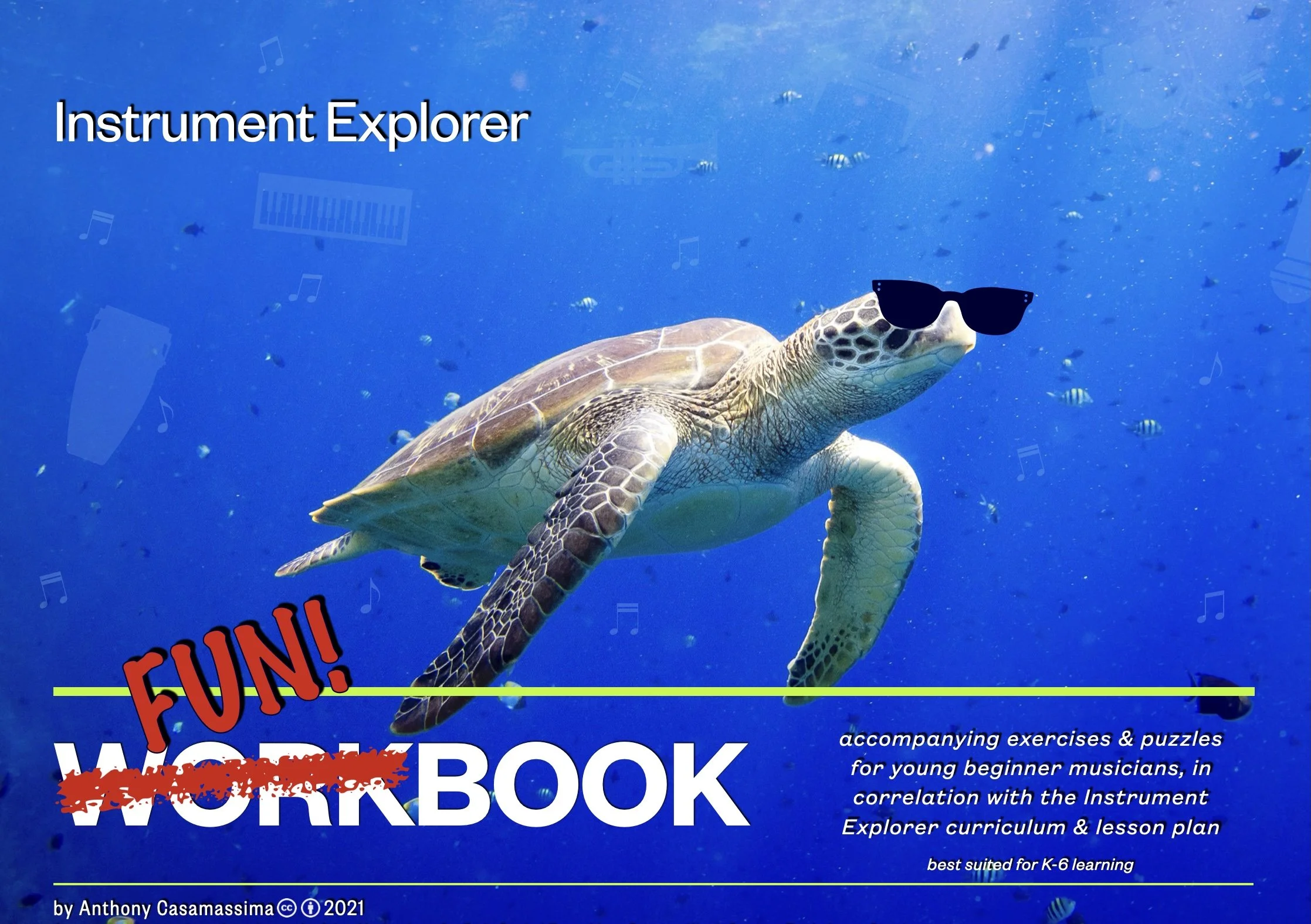
Each unit integrates core musicianship skills, interactive activities, and foundational performance literacy. I began development of the WorkFun!Book as a musical enrichment tool for music education development, and developed a pilot exam for the Strings unit that was statistically valid as an official assessment exam.
Funding recommendations include a yearly federal grant proposal to supply basic materials for K-6 use in local public school music programs. Successful implementation of this model could lead to better outcomes and student retention in middle school music programs. A full research-backed curriculum for the program has been shared publicly online.
the holiday saxtet | 2020
(Adaptable Community Performance Kit)
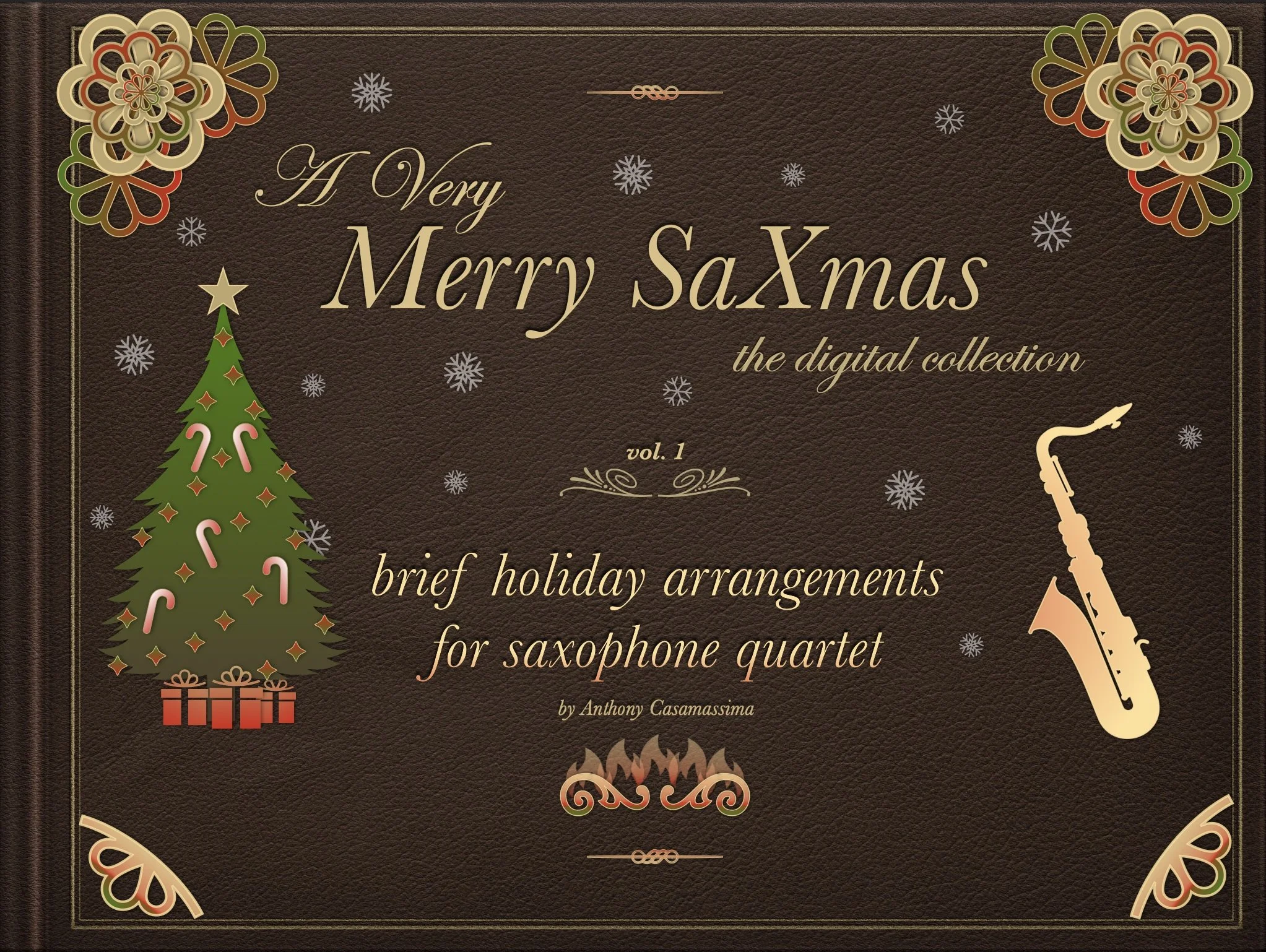
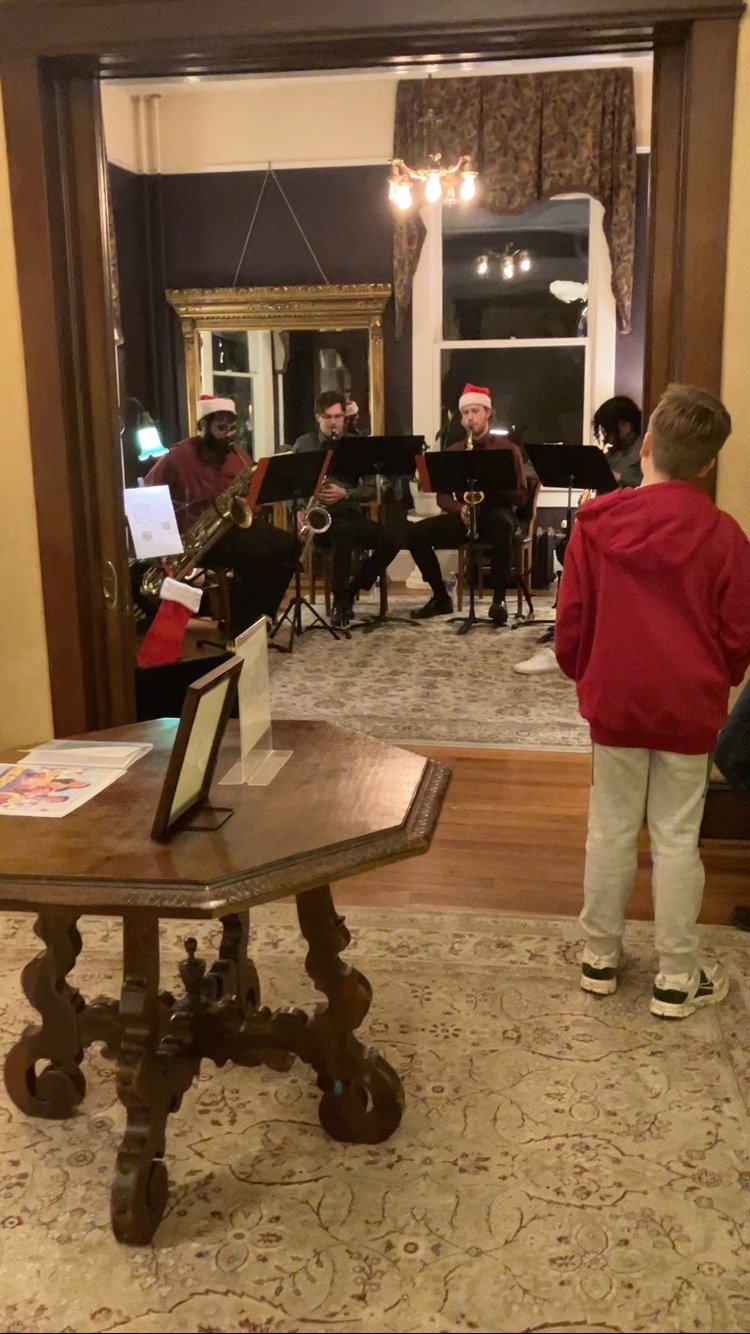
The Holiday Saxtet is a miniature holiday music collection featuring accessible saxophone quartet arrangements of public domain Christmas songs. Designed for flexible instrumentation and quick assembly, the set includes stylistically diverse charts and an accompanying educational booklet to support community‑based music‑making in seasonal settings.
Conceived as a reusable and remixable performance blueprint, the project enables student, community, or ad hoc ensembles to mount low‑prep holiday performances in schools, libraries, and public spaces.
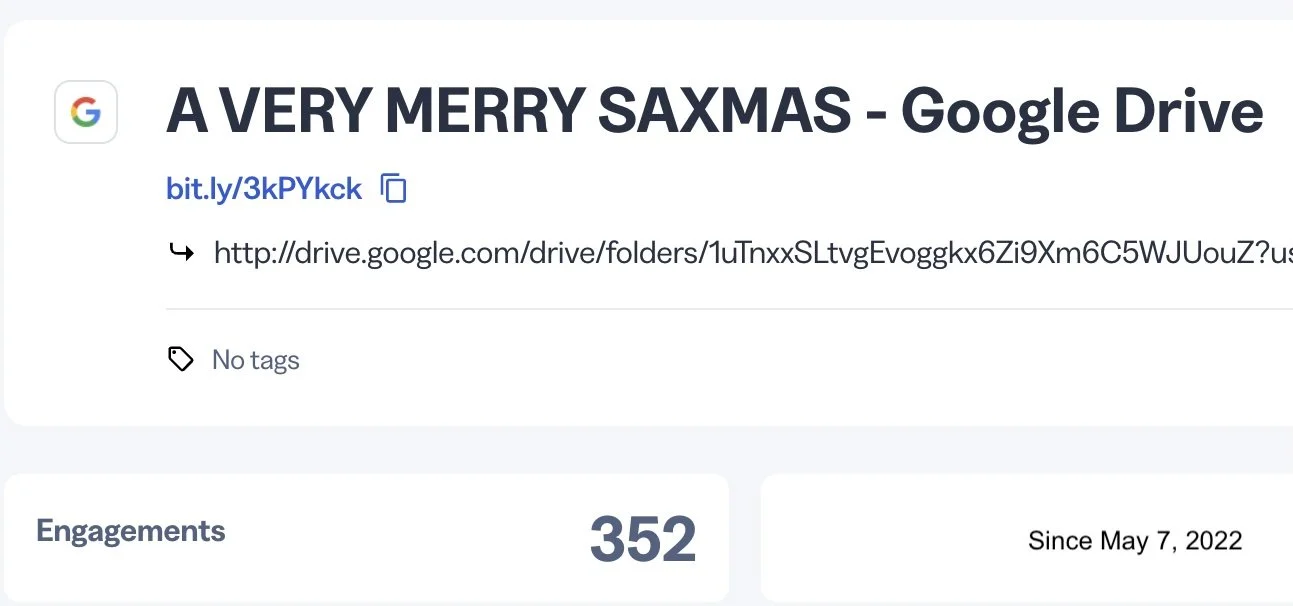
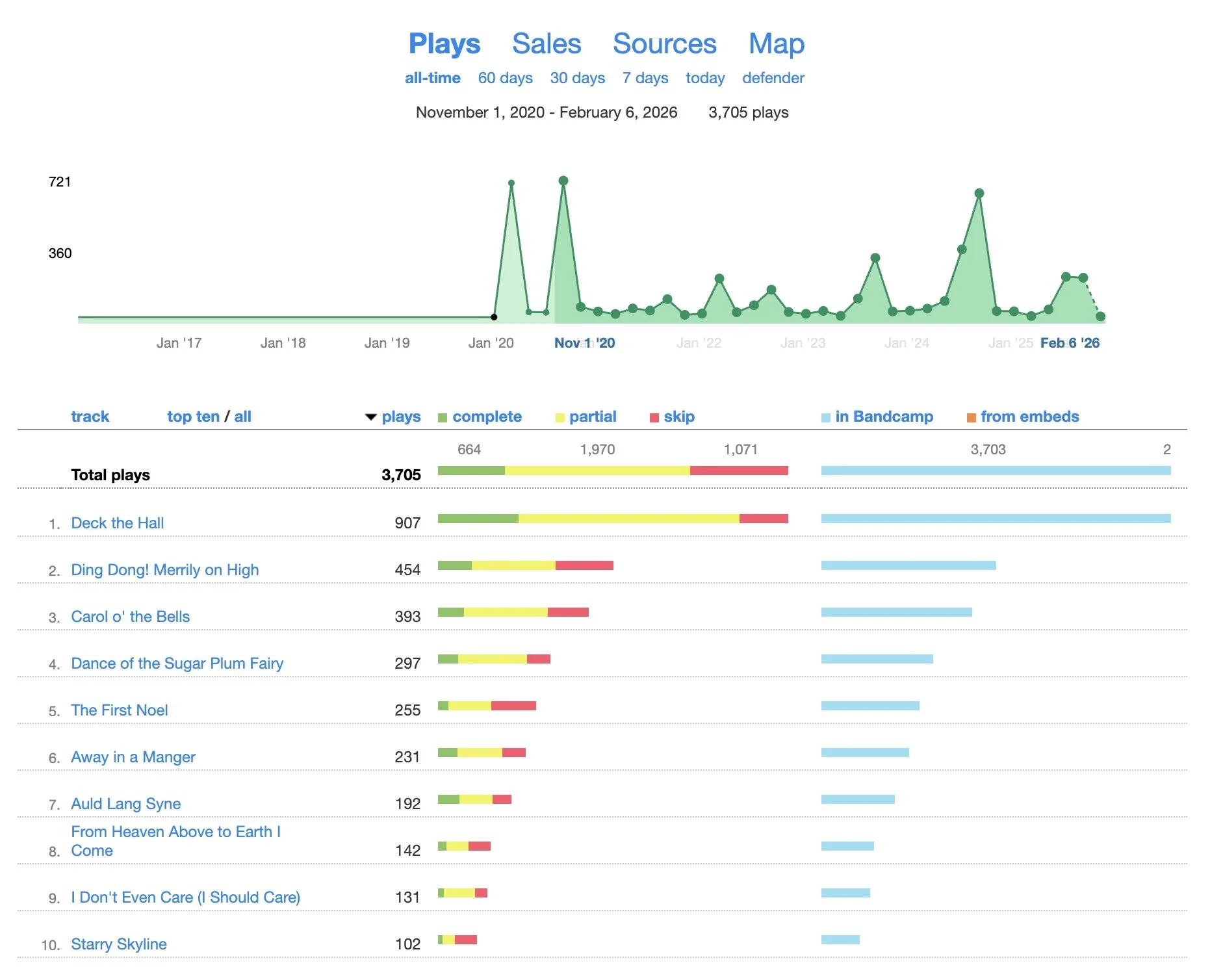
Originally released during the first winter of the pandemic, the materials have since been accessed and used internationally, with recurring downloads and engagement each holiday season.